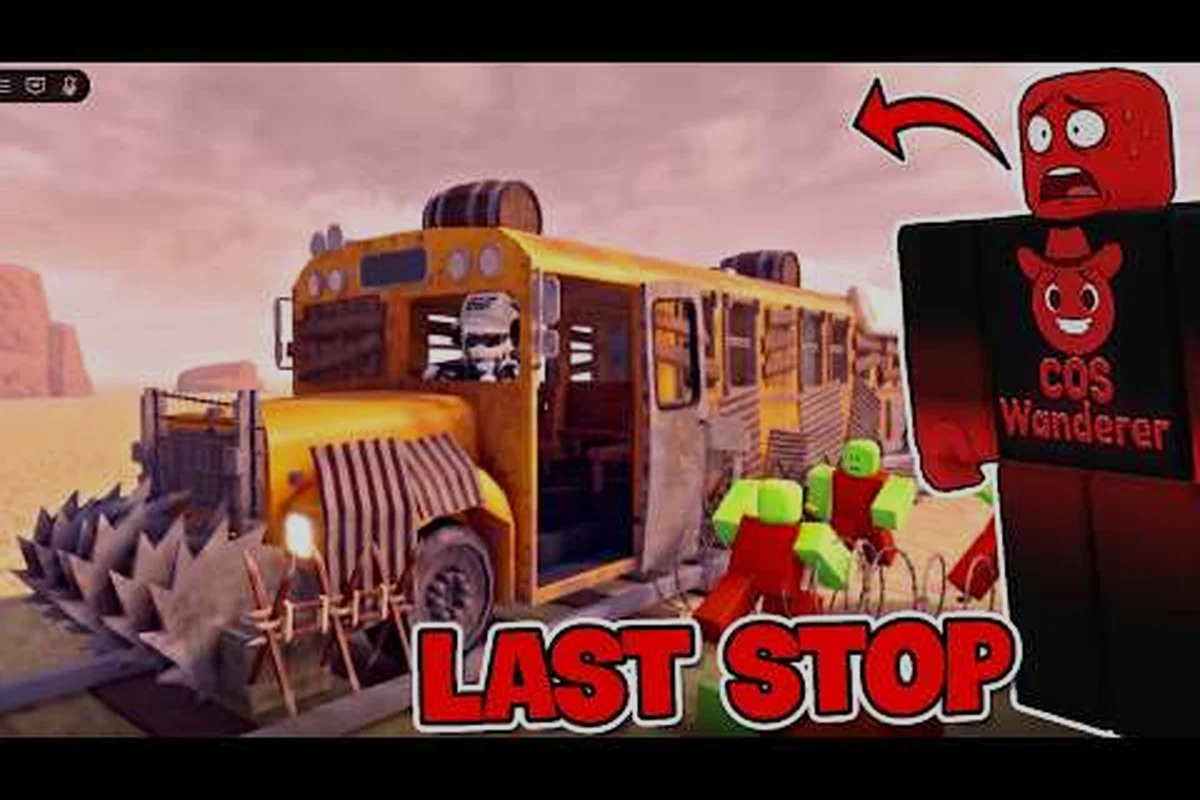
Fuel is the single resource that decides whether your Last Stop run ends in victory or a stalled bus surrounded by zombies. This fuel guide covers the Last Stop bus fuel system from the ground up: how the gas tank drains, where to keep a Last Stop fuel chest, which bus stops actually trade fuel, and how to plan a stop-to-stop refueling route that survives long night legs without interruption. Whether you are running solo or coordinating with a four-player crew, mastering the fuel economy is the difference between reaching the final stop and running dry in the middle of a horde wave.
The game, developed by The Hidden Route and launched on Roblox in August 2026, has already passed 21 million visits and routinely runs above 20,000 concurrent players. The core loop is simple on paper, build and upgrade a bus, scavenge abandoned buildings, sell what you find, and survive waves of zombies until you reach the last stop. In practice, every mechanic in the game orbits around fuel: distance to the next stop, time between horde waves, length of night legs, and even the value of a scavenging detour all flow from how efficiently you burn the tank. According to community data, players who treat fuel as a primary build resource consistently outlast crews who ignore it until the warning light blinks.
Understanding the Last Stop Gas Tank and Fuel Drain
The Last Stop gas tank sits at the rear of every bus frame, and it works as a fixed-capacity resource pool rather than a regenerating one. Every meter the bus rolls forward drains a set amount of fuel, and idling or stopping does not refill the tank. According to Cocajola's full-game walkthrough, the tank is the single mechanic most new players underestimate, because the early game feels generous and the late game punishes every wasted meter.
How Fuel Consumption Works
Fuel drain in Last Stop is distance-based, not time-based. Sitting in a cleared bus stop for five minutes costs nothing; rolling the bus toward the next stop burns fuel the moment the wheels turn. Two factors compound this drain: bus weight and terrain. Heavier bus builds, including metal walls, bulletproof windows, and a snow plough grill, all add tonnage that increases per-meter fuel cost. Players running a stripped-down starter bus can stretch a full tank noticeably farther than crews hauling a fully armored rig.
| Factor | Effect on Fuel Drain | Notes |
|---|---|---|
| Bus weight (walls, armor, storage) | Higher | Metal walls add noticeable drain vs. wooden starter walls |
| Terrain (highway vs. off-road) | Higher on rough terrain | Stick to paved routes when the tank is low |
| Speed (slow roll vs. fast roll) | Marginal | Speed mostly affects dodge timing, not drain |
| Engine upgrades | Lower | Reduces drain modestly, not a substitute for refueling |
The community-tested takeaway is that armor is a fuel investment, not a free durability buff. Every wall you bolt on eats into the next leg's range, which is why the Last Stop bus fuel economy rewards deliberate building rather than piling on every part you can afford.
Recognizing the Low-Fuel Warning
The gas tank visually depletes from full to empty, and a warning chime plays at roughly the low mark. After that chime, you have enough fuel to reach the next one or two stops, but only if you do not detour. According to community testing on the September 2026 build, the warning fires earlier than most players expect, which is intentional: the game wants you to plan refueling into your route, not improvise it. Players who ignore the warning typically end up pushing the bus by hand through a zombie swarm, which is a fast way to lose both the run and the loot on board.
Setting Up the Last Stop Fuel Chest and Storage Layout
The dedicated Last Stop fuel chest is the highest-leverage storage decision in the entire bus-build system. A fuel chest placed directly beside the gas tank acts as a buffer: you can top off the tank mid-leg without leaving the driver's seat, which keeps one player on the wheel while the rest of the crew watches the flanks. The chest itself is a normal storage object, but its proximity to the tank is what makes it powerful. Atlantic Blox's 100,000-mile build demonstrates the standard layout: gas tank at the rear, fuel chest on the inside wall, spare tire on the opposite side, and overhead roof storage above the driver's cabin.
Chest Placement and Inventory Routing
Fuel chests hold fuel canisters, rocket canisters, and a small reserve of repair parts. The placement matters because of how Last Stop's inventory routing works. Press TAB to open inventory, then drag a fuel canister directly into the chest from the loot screen. Fuel in the chest does not auto-flow to the tank; you have to manually transfer, which is a deliberate design choice so crews can ration fuel during long legs rather than burning through reserves the moment a chest fills.
| Storage Slot | Recommended Contents | Why |
|---|---|---|
| Last Stop fuel chest (beside tank) | 6-10 fuel canisters, 2-3 rocket canisters | Quick top-off during night legs |
| Overhead roof storage | Spare weapons, ammo, bandages | Keeps the driver's cabin clear |
| Double chests (interior) | Scavenged loot, sell items, spare armor | Frees the fuel chest for fuel only |
| Wall-mounted small chest | Medkits, food, water | Emergency survival supplies |
A common mistake is dumping every loot drop into the fuel chest because it is the most accessible storage. That fills the chest with sell items and leaves no room for fuel, which defeats the whole point. The cleaner habit is to keep the fuel chest reserved for fuel and rockets only, and route everything else to interior double chests.
Tire Storage and Blowout Prevention
Fuel is not the only consumable that decides whether a leg succeeds. Bus tires take damage on rough terrain, and a blowout at the wrong moment strands the bus mid-wave. Keeping a spare tire on board, stored near the fuel chest for quick access, lets a crew member swap a blown tire in a brief window without leaving the bus. The Zonko upgrade series covers tire management as part of a broader fuel-budgeting mindset: every resource on the bus, including tires, fuel, and repair parts, is part of one shared survival pool.
Last Stop How to Get Fuel: Stops, Trades, and Scavenge Routes
Learning Last Stop how to get fuel is a matter of knowing which bus stops stock it, which ones trade fuel for other resources, and which ones are best skipped to save range. Not every stop is a refueling stop, and treating them all the same is how crews run dry halfway through a night leg.
Bus Stops That Stock Fuel
Three stop types reliably carry fuel in the September 2026 build. Highway rest stops trade fuel canisters for scrap metal, which is a fair exchange if your crew has been clearing buildings along the route. Gas station stops stock fuel directly but charge a premium in cash, which means a crew that skips scavenging in favor of buying fuel will bleed money fast. Finally, military outposts trade fuel for weapons or ammo, which fits a build that is already weapon-heavy but punishes a crew running low on firepower.
| Stop Type | Fuel Source | Cost / Trade | Best For |
|---|---|---|---|
| Highway rest stop | Fuel canisters | Scrap metal (3:1 ratio) | Crews with extra metal from wall builds |
| Gas station | Fuel canisters | Cash (premium price) | Cash-rich crews that skip scavenging |
| Military outpost | Fuel canisters | Weapons or ammo | Weapon-heavy crews with spare guns |
| Abandoned town | Scavenged fuel (rare) | Time and zombie risk | Desperate crews on empty |
The fourth row, abandoned towns, is worth flagging because it is the only stop type where fuel is a scavenge drop rather than a trade. According to community reports, fuel can spawn in garages, basements, and the back rooms of gas stations inside towns, but the drop rate is low and the zombie density is high. A crew that detours into a town for fuel is gambling two resources at once: time and hull durability.
Stop-to-Stop Refueling Planning
The real skill in Last Stop bus fuel management is planning the route so that you arrive at each refueling stop with enough fuel left to reach the next one, plus a small buffer. Community data suggests a comfortable buffer is a substantial share of the tank: enough to detour around a zombie cluster or backtrack if a stop is already looted. Running the tank below critical HP between stops is where most stalls happen, because the last leg of a route is always slightly longer than it looks on the map.
A practical refueling cadence looks like this:
-
Leg 1 (Start to first highway stop): Leave the garage at full tank, roll at moderate speed, arrive with above average fuel. Top off at the rest stop using scrap metal.
-
Leg 2 (Highway to gas station): Roll at moderate speed, avoid off-road detours, arrive with around half fuel. Buy one or two canisters to refill the chest.
-
Leg 3 (Gas station to military outpost): Save fuel by skipping a tempting abandoned town, arrive with a comfortable fuel margin. Trade spare ammo for fuel canisters.
-
Leg 4 (Outpost to final stretch): Top off fully, roll to the next safe zone, and stage the final push with a full tank plus a chest stocked for emergencies.
This is not a rigid route, because Last Stop's map is procedurally varied, but the principle holds: refuel at every stop that trades fuel, carry a buffer, and skip detours when the tank drops below low HP.
Last Stop Bus Tires, Armor Weight, and Fuel Trade-offs
Tires and armor are the two build categories that most directly affect fuel drain, so the Last Stop bus tires decision and the armor loadout have to be planned together. A fully armored bus with reinforced tires is significantly harder to kill but burns through a full tank noticeably faster than a stripped-down starter rig. The art of the bus build is finding the right balance for your crew's playstyle.
Tire Types and Fuel Cost
Three tire types are available in the September 2026 build. Standard tires are the default, balanced in durability and fuel cost. Reinforced tires last longer on rough terrain but add weight, which increases per-meter fuel drain. Lightweight tires reduce drain but blow out faster, which means more mid-leg tire swaps. According to DustPlays' class and bus breakdown, the tire choice is an offense-versus-durability trade-off, just like the snow plough grill versus the saw grill debate on the front bumper.
| Tire Type | Durability | Fuel Drain | Best For |
|---|---|---|---|
| Standard | Medium | Medium | Balanced crews, mixed terrain |
| Reinforced | High | High | Off-road routes, heavy bus builds |
| Lightweight | Low | Low | Highway-only routes, light bus builds |
For a crew that runs a heavy armored bus, reinforced tires are worth the fuel cost because a blowout on a metal-walled rig is catastrophic. For a crew running a light bus on a highway route, lightweight tires stretch the tank and rarely blow out on paved roads. The Last Stop bus armor guide covers the full armor tier list, but the fuel takeaway is simple: armor weight and tire choice are two halves of the same fuel equation.
Armor Weight and Range
Every wall, window, and bumper adds weight, and every kilogram of weight adds to fuel drain. The starter bus with wooden walls and no upgrades is the most fuel-efficient build in the game, but it also dies the fastest in a horde wave. A mid-tier build with metal walls and bulletproof windows is the most popular community loadout because it doubles durability at a manageable fuel cost. A maxed-out bus with every upgrade is a fortress, but it burns fuel so fast that even a fully stocked fuel chest cannot keep up on long legs.
| Build Tier | Approximate Fuel Range | Durability | Crew Skill Required |
|---|---|---|---|
| Starter (wood walls) | Baseline range | Low | Beginner |
| Mid-tier (metal walls) | Slightly below baseline | Medium | Intermediate |
| Heavy (metal + windows + plough) | Well below baseline | High | Advanced |
| Maxed (all upgrades) | Least range of any build | Very high | Expert, coordinated crew |
A solo player running a heavy build will struggle with fuel because there is no crew to manage the chest while driving. A coordinated four-player crew can handle a heavy build because one player drives, one manages the fuel chest, one watches the flanks, and one scouts the next stop. The Last Stop how to build bus guide covers the full upgrade path, including which parts to prioritize for a fuel-efficient mid-tier build.
Budgeting Fuel on Long Night Legs and Final Pushes
The longest legs of any Last Stop run are the night legs, when zombie density spikes and visibility drops. These are also the legs where fuel runs out fastest, because players tend to drive faster to outrun hordes and faster driving on rough terrain burns more fuel per meter. A disciplined night-leg routine saves more fuel than any single upgrade.
Night-Leg Fuel Routine
The first rule of night legs is to slow down. Zombies are slower than the bus at any speed, so flooring the throttle does not outrun them, it just burns fuel. Rolling at a steady moderate pace, fast enough to keep distance from the horde but slow enough to read the road, is the most fuel-efficient speed. The second rule is to keep the fuel chest topped off before the leg starts. A chest with six to ten canisters is the standard night-leg loadout, and a crew that starts a night leg with an empty chest is gambling the run on finding fuel mid-leg.
The third rule is to assign a fuel manager. On a four-player crew, one player is responsible for the fuel chest, transferring canisters to the tank as needed and watching the fuel gauge. On a solo run, the player has to manage the chest while driving, which is doable but requires pulling over to a safe spot before opening the inventory. The Last Stop mobile controls guide covers inventory management on touchscreens, which is the most common pain point for solo players running a fuel-heavy build.
Final Push Strategy
The final push to the last stop is the most fuel-intensive leg of the run, because it is usually the longest and the most heavily defended. A crew that arrives at the second-to-last stop with a full tank and a full fuel chest is in the strongest possible position for the final push. A crew that arrives with a half tank and an empty chest is one bad wave away from a stall.
The community-tested final-push strategy is to top off everything at the second-to-last stop: full tank, full chest, full tire spare, full medkit. Then roll at a steady pace, avoid every detour, and keep the fuel gauge above very low HP at all times. If the gauge drops below very low HP with no stop in sight, the crew should consider pulling over and waiting for a wave to clear rather than pushing into a low-fuel stall. Running the bus into the final stop at critical HPfuel feels heroic, but it is the most common way to lose a run in the last thirty seconds.
Frequently Asked Questions
Where should I place the Last Stop fuel chest on my bus?
The fuel chest should go on the inside wall directly beside the gas tank at the rear of the bus. This placement lets a crew member top off the tank without leaving the driver's seat, which is critical during night legs. Keep the chest reserved for fuel and rocket canisters only, and route all other loot to interior double chests so the fuel chest never runs out of space.
What is the fastest way to get fuel in Last Stop?
The fastest reliable fuel source is the highway rest stop, which trades fuel canisters for scrap metal at a 3:1 ratio. Gas stations stock fuel directly but cost cash, and military outposts trade fuel for spare weapons. Scavenging abandoned towns can yield fuel drops, but the drop rate is low and the zombie density is high, so it is a last-resort option rather than a primary strategy.
Do reinforced tires actually help with fuel efficiency?
No, reinforced tires improve durability but increase per-meter fuel drain because of the added weight. For fuel efficiency, lightweight tires are the better choice on paved highway routes, though they blow out faster on rough terrain. Standard tires are the most balanced option for mixed terrain, and reinforced tires only make sense on a heavy armored bus where a blowout would be catastrophic.
How do I avoid running out of fuel on long night legs?
Plan a refueling stop into every leg, keep the fuel chest stocked with six to ten canisters before each night leg, and assign one crew member to manage the chest. Roll at a steady moderate pace instead of flooring the throttle, and pull over to a safe spot if the gauge drops below very low HP with no stop in sight. None of those habits cost scrap, which is what makes them worth building before any upgrade.
Can a solo player run a heavy armored bus without running dry on fuel?
It is possible but difficult, because a solo player has to manage the fuel chest while driving, which requires pulling over to open the inventory. A solo player running a heavy build should prioritize lightweight tires, skip non-essential upgrades, and keep the fuel chest fully stocked at every stop. For most solo players, a mid-tier build with metal walls and standard tires is the most fuel-efficient balance of durability and range.